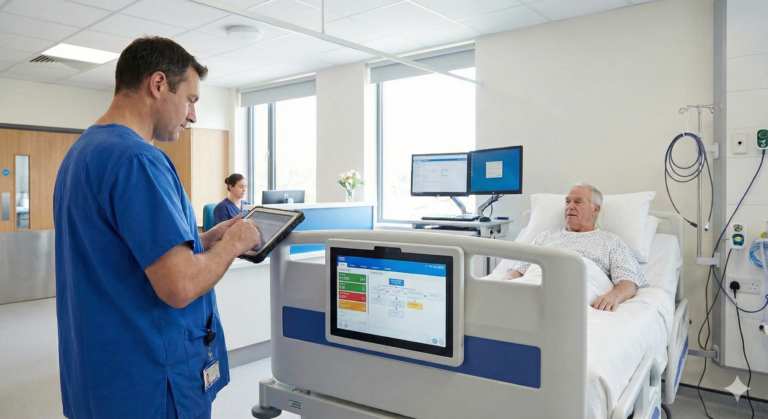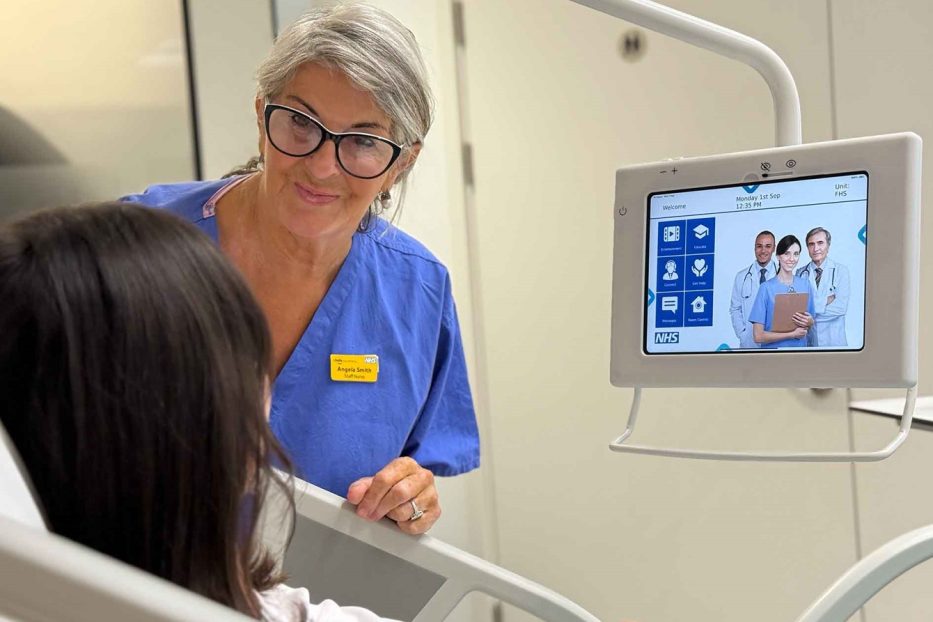
From Optional Amenity to Clinical Infrastructure
For many years, bedside technology in hospitals was viewed through a narrow lens. Screens were primarily there to distract, to pass the time, or to make a hospital stay slightly more bearable. Useful, perhaps — but rarely considered essential to the delivery of care.
That perspective no longer reflects the reality facing the NHS.
As pressures on services continue to grow, attention has shifted towards improving patient experience, supporting recovery, and making better use of limited clinical time. In this context, patient engagement technology has evolved from a passive amenity into an active enabler of care — supporting participation, capturing meaningful feedback, and helping clinical teams work more efficiently.
This evolution closely aligns with the ambitions set out in the NHS Long Term Plan , which places a strong emphasis on personalised care, digitally enabled services, and supporting people to play a more active role in managing their health.
Patient Engagement Drives Better Outcomes
Early bedside systems were largely designed for entertainment. While they offered comfort and distraction, they played little role in how patients engaged with their care.
Today, expectations are different. Patients are increasingly supported to understand their condition, participate in decisions, follow treatment and recovery guidance, and prepare for discharge. This shift towards personalised care and shared decision-making sits at the heart of NHS policy and reflects a growing body of evidence that engagement matters.
Research into patient activation — a measure of a person’s knowledge, skills and confidence in managing their health — shows that more engaged patients experience better outcomes and make less use of emergency services.
Bedside engagement technology supports this shift by delivering information, reassurance and prompts at the point of care. It meets patients where they are, at a time when anxiety can be high and verbal explanations are easily forgotten, reinforcing clinical conversations rather than replacing them.
Why PREMs and PROMs Work Better at the Bedside
Patient Recorded Experience Measures (PREMs) and Patient Reported Outcome Measures (PROMs) are now well established as core indicators of quality across the NHS. However, the way they are often collected can limit their value.
When feedback is gathered after discharge, it arrives too late to improve the stay that generated it. Opportunities to intervene are missed, and frontline teams rarely see a clear connection between patient feedback and day-to-day care.
Enabling real-time patient feedback at the bedside changes this dynamic. Issues can be identified and addressed while patients are still in hospital, allowing small, timely interventions that can significantly improve experience without escalating workload.
PROMs also benefit from being embedded into routine care. Bedside prompts reduce reliance on paper processes and follow-up calls, helping make outcome measurement more accessible for patients and more sustainable for NHS services.
Digital Access Reduces Information Overload
Patient engagement is not only about capturing data. It also plays a meaningful role in recovery itself.
Patients are often required to absorb large amounts of information about procedures, medication and rehabilitation at a time when stress and fatigue are high. Bedside technology allows patients to revisit information when they are ready, reinforcing understanding and reducing uncertainty.
As explored previously by Airwave Healthcare, better patient engagement at the bedside can improve experience and confidence without adding pressure to clinical teams. This reflects NHS priorities around using digital tools to support staff rather than create additional burden.
Patient Information Reduces Non-Clinical Interruptions
Patient engagement is often framed as an experience initiative, but its operational impact is just as significant.
A considerable proportion of pressure on wards comes from non-clinical interruptions — repeated questions, requests for updates, and calls for information that could be resolved with clearer communication. Evidence shows that avoidable interruptions to care reduce the time available for direct clinical activity.
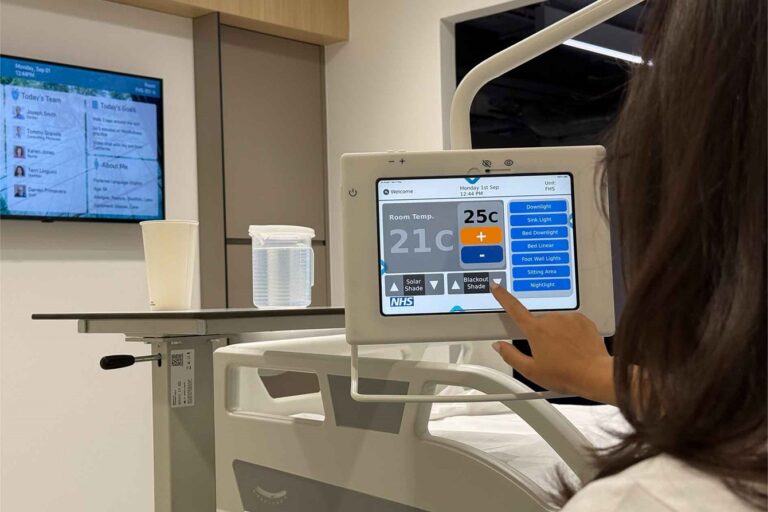
Bedside engagement platforms help address this by giving patients access to information and enabling non-urgent requests to be made digitally. This helps make staff time more predictable and allows clinical teams to focus on care where it is most needed.
There are wider benefits too. Better-informed patients are often better prepared for discharge, helping to reduce delays caused by confusion or missing information and supporting patient flow across the NHS.
Bedside Technology as Care Infrastructure
The role of bedside technology has changed. What was once seen as optional is now closely linked to how care is experienced, measured and delivered.
Patient engagement technology does not replace clinical expertise, nor does it solve the systemic challenges facing the NHS. But when implemented thoughtfully, it supports the ambitions of the NHS Long Term Plan — enabling personalised care, strengthening feedback loops, improving use of staff time, and helping patients play a more active role in their own health.
In today’s NHS, the bedside screen is no longer just a source of entertainment. It has become part of the care environment itself.
Get in Touch with Airwave Healthcare
If you’re exploring digitally enabled care in your organisation, we’re happy to share practical insight from frontline NHS deployments. You can contact our team at connect@hospitaltv.co.uk or arrange a short introductory call at a time that suits you.